5,9-Dimethyl-4,8-decadienal (CAS 762-26-5) — Citrus Top Note Fragrance Ingredient
5,9-Dimethyl-4,8-decadienal
CAS 762-26-5
What Is 5,9-Dimethyl-4,8-decadienal?
5,9-Dimethyl-4,8-decadienal is a synthetic fragrance ingredient used to add fresh, citrusy, and marine nuances to perfumes. It’s commonly found in modern aquatic and fresh fragrances. This aldehyde is valued for its ability to create sparkling top notes that evoke ocean breezes and crisp citrus zest, making it popular in summer fragrances and body care products.
Safety Profile
GENERALLY SAFEWhat Does 5,9-Dimethyl-4,8-decadienal Smell Like?
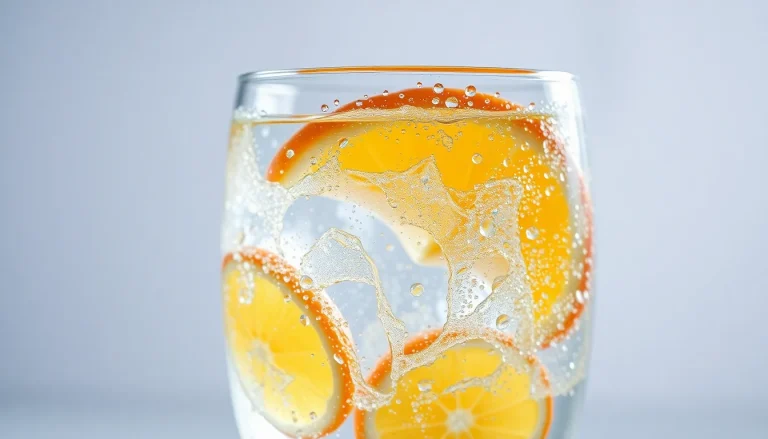
5,9-Dimethyl-4,8-decadienal opens with a burst of effervescent citrus, reminiscent of freshly peeled mandarin and grapefruit. The heart reveals a subtle marine character, like sun-warmed seaweed on a rocky shore. As it dries down, a clean, slightly woody undertone emerges, providing lasting freshness. The overall effect is vibrant yet refined, with a modern edge that sets it apart from traditional citrus aldehydes.
In Famous Fragrances
Fragrance associations may not reflect actual formulations.
Used to enhance the aquatic freshness, creating a modern interpretation of ocean air with citrus sparkle.
Adds a crisp, watery citrus note that complements the floral heart, evoking dewdrops on petals.
2D Molecular Structure
SMILES: CC(C)=CCCC(C)=CCCC=O
Chemistry, Properties & Perfumer Guide
The Chemistry
5,9-Dimethyl-4,8-decadienal is a branched-chain unsaturated aldehyde. Its synthesis typically involves the oxidation of corresponding alcohols or controlled ozonolysis of appropriate dienes. The molecule’s reactivity is influenced by its conjugated double bond system, which contributes to both its olfactory properties and chemical stability. As a synthetic material, it offers consistent quality and avoids sourcing issues associated with natural alternatives.
Physical & Chemical Properties
| Boiling Point | N/A |
|---|---|
| Density | N/A |
Perfumer Guide
| Application | Typical % | Range | Notes |
|---|---|---|---|
| Fine Fragrance | 0.5-2% | Up to 5% | Creates fresh openings |
| Body Care | 0.1-0.5% | Up to 1% | Adds clean character |
Classic Accords
Tip: Use alongside other fresh notes to enhance diffusion and longevity.
Alternatives & Comparisons
Safety, Regulatory & Sustainability
⚠ Regulatory Disclaimer
General reference only. Consult current IFRA Standards Library before formulating.
IFRA Status
No specific restrictions under current IFRA standards.
RIFM Assessment
Considered safe for use in fragrances at typical concentrations.
Sustainability
As a synthetic material, 5,9-Dimethyl-4,8-decadienal avoids agricultural impacts but requires energy-intensive production. Its consistent quality reduces batch variability common in natural materials.
Explore 5,9-Dimethyl-4,8-decadienal
Browse essential oils and aroma compounds.
Browse on iHerb →Affiliate disclosure: we may earn a small commission at no extra cost to you.
References
- Arctander, S. (1969). Perfume and Flavor Chemicals.
- IFRA Standards Library Safety guidelines
Data: PubChem (NIH), PubMed, RIFM, IFRA. Last reviewed: Apr 2026.
Report a data errorIngredient Data Sheet
CAS 762-26-5Physical Properties
| Molecular Weight | 180.29 g/mol🔬 PubChem |
| LogP (Octanol-Water) | 3.5🔬 PubChem |
| Boiling Point | 249.4 °C🔬 EPA CompTox |
| Vapor Pressure | 0.0167 mmHg @ 25°C📊 OPERA |
| Flash Point | 94 °C🔬 EPA CompTox |
| Involatility Index | 0.0013💻 Calculated |
| log Kp (skin permeability) | -1.315💻 Calculated |
| SMILES | CC(=CCCC(=CCCC=O)C)C🔬 PubChem |
Volatility & Performance
| Fragrance Note | Heart💻 Calculated |
| Volatility Class | Very slow💻 Calculated |
| Persistence Score | 3.5 / 5💻 Calculated |
Odor & Flavor
| Primary Descriptors | citrussweet• leffingwell |
| Functional Groups | aldehydealkene💻 RDKit |
Regulatory Status
| IFRA Listed | Yes — see IFRA Standards for category limits⚖️ IFRA 51 |
Physical data: PubChem (NIH/NLM), U.S. EPA CompTox Dashboard, EPA OPERA models, RDKit. Odor & flavor: Arctander (Perfume & Flavor Chemicals), Fenaroli's Handbook of Flavor Ingredients, Leffingwell. Thresholds: van Gemert (Compilations of Odour Threshold Values). Regulatory: IFRA Standards 51st, FEMA GRAS. Trade names: Surburg (Common Fragrance & Flavor Materials). All data compiled and cross-referenced for perfumertools.com.
Physicochemical Properties
DTXSID: DTXSID4052504
Physical Properties
| Molecular Weight | 180.291 g/mol🔬 EPA CompTox |
| Density | 0.875 g/cm^3🔬 EPA CTX |
| Boiling Point | 249.4 °C🔬 EPA CTX |
| Melting Point | 4.247 °C📊 OPERA |
| Flash Point | 94 °C🔬 EPA CTX |
| Refractive Index | 1.459 Dimensionless📊 OPERA |
| Molar Volume | 210.767 cm^3/mol📊 OPERA |
Partition & Solubility
| LogP (Octanol-Water) | 4.4 Log10 unitless🔬 EPA CTX |
| LogD (pH 5.5) | 4.123 Log10 unitless📊 OPERA |
| LogD (pH 7.4) | 4.123 Log10 unitless📊 OPERA |
| LogKoa (Octanol-Air) | 5.8 Log10 unitless📊 OPERA |
| Water Solubility | 0 mol/L🔬 EPA CTX |
| Henry's Law Constant | 0 atm-m3/mole📊 OPERA |
Transport Properties
| Vapor Pressure | 0.017 mmHg🔬 EPA CTX |
| Viscosity | 2.113 cP📊 OPERA |
| Surface Tension | 28.094 dyn/cm📊 OPERA |
| Thermal Conductivity | 136.824 mW/(m*K)📊 OPERA |
Molecular Descriptors
| Topological Polar Surface Area | 17.07 Ų💻 Computed |
| H-Bond Donors | 0 count💻 Computed |
| H-Bond Acceptors | 1 count💻 Computed |
| Rotatable Bonds | 6 count💻 Computed |
| Aromatic Rings | 0 count💻 Computed |
| Molar Refractivity | 57.631 cm^3/mol📊 OPERA |
| Polarizability | 22.847 Å^3📊 OPERA |
Data Sources:
🔬 EPA Experimental data from U.S. EPA CompTox Chemicals Dashboard & CTX APIs. 📊 OPERA Predicted using EPA's OPERA QSAR models. 💻 Computed Calculated from SMILES using RDKit.
Related Research
- Diglycerides, vegetable-oil monoglycerides and diglycerides (CAS 97488-91-0) — Citrus Functional Note Fragrance Ingredient
- Fir needle oil, Siberian (CAS 8021-29-2) — Green Middle Note Fragrance Ingredient
- 3a,4,5,6,7,7a-Hexahydro-2,6(or 3,6)-dimethyl-4,7-methano-1H-inden-5-ol (CAS 94248-21-2) — Woody Heart to base Note Fragrance Ingredient
- Spikenard oil (CAS 8022-22-8) — Earthy Base Note Fragrance Ingredient

![Spiro[bicyclo[4.1.0]heptane-2,5′-[1,3]dioxane], 2′,2′,3,7,7-pentamethyl-, (1.alpha.,3.beta.,6.alpha.)- (CAS 121251-68-1) — Woody Base Note Fragrance Ingredient](https://thegoodscents.company/wp-content/uploads/2026/04/spiro-bicyclo-4-1-0-heptane-2-5-039-1-3-dioxane-2-039-2-039-1-3-768x439.webp)