

cis-beta Santalol (CAS 77-42-9) — Woody Heart Note Fragrance Ingredient
cis-beta Santalol
CAS 77-42-9
What Is cis-beta Santalol?
Cis-beta santalol is a key molecule that creates the creamy, woody heart of sandalwood fragrances. You’ll find it in luxury perfumes, scented candles, and high-end personal care products. This ingredient matters because it captures sandalwood’s magic without using endangered natural resources, offering sustainability alongside its rich scent profile.
Safety Profile
GENERALLY SAFEWhat Does cis-beta Santalol Smell Like?
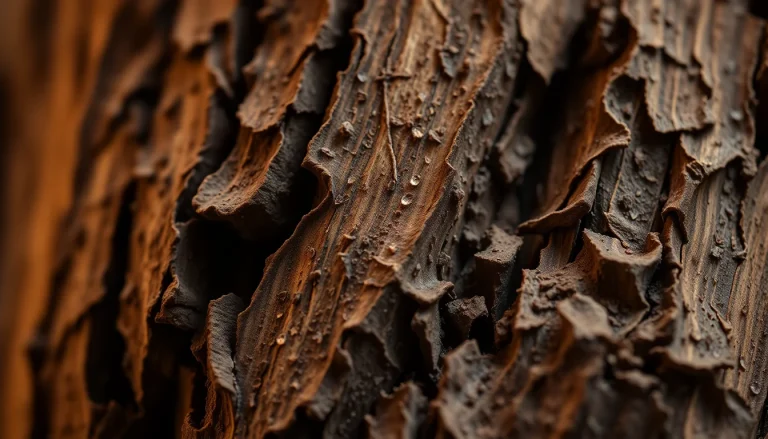
Cis-beta santalol unfolds like warm honey dripping over polished teak – initially presenting a bright, almost citrusy woodiness that quickly deepens into velvety cream. The heart reveals milky facets with subtle coconut undertones, while the drydown lingers as the perfect sandalwood illusion: sweet sawdust, skin-like musk, and a whisper of vanilla. Unlike harsh woody chemicals, this maintains natural smoothness for hours, never turning sharp or synthetic.
In Famous Fragrances
Fragrance associations may not reflect actual formulations.
The signature sandalwood accord leans heavily on cis-beta santalol for its creamy, long-lasting woodiness that blends with cardamom and iris. The synthetic purity allows consistent batch-to-batch reproduction of this cult favorite.
Uses cis-beta santalol to recreate the meditation temple scent without real sandalwood. The molecule’s natural diffusion mimics aged wood beams in humid air.
2D Molecular Structure
SMILES: C\C(CO)=C\CC[C@]1(C)[C@H]2CC[C@H](C2)C1=C
Chemistry, Properties & Perfumer Guide
The Chemistry
Cis-beta santalol belongs to the santalane sesquiterpenoid alcohol family, specifically (Z)-β-santalol. Modern synthesis typically involves biotechnological routes using engineered yeast strains that convert farnesyl pyrophosphate via santalene synthase. The cis configuration at the 2-3 position is critical for odor quality, with the trans isomer smelling significantly harsher. Recent advances allow >98% isomeric purity through chiral chromatography.
Physical & Chemical Properties
| Appearance | Colorless to pale yellow viscous liquid |
|---|---|
| Boiling Point | 302-305 °C |
| Density | 0.977 g/cm³ |
| Refractive Index | 1.508-1.512 |
| Solubility | Soluble in ethanol, insoluble in water |
Perfumer Guide
| Application | Typical % | Range | Notes |
|---|---|---|---|
| Fine Fragrance | 2-5% | Up to 10% | Core sandalwood replacer |
| Home Fragrance | 1-3% | Up to 5% | Adds warmth without smoke |
Classic Accords
Tip: Stabilize in dipropylene glycol before adding to ethanol bases to prevent crystallization.
Alternatives & Comparisons
More diffusive but less creamy. Use when projection is prioritized over smoothness.
Safety, Regulatory & Sustainability
⚠ Regulatory Disclaimer
General reference only. Consult current IFRA Standards Library before formulating.
IFRA Status
No restrictions under IFRA 51st Amendment.
RIFM Assessment
RIFM assessment confirms safe use up to 10% in leave-on products.
Sustainability
Synthetic production eliminates pressure on endangered Indian sandalwood (Santalum album). Most commercial material now derives from renewable plant-based farnesene, with carbon footprint 80% lower than 2010 petroleum-based routes. Biodegradability exceeds OECD 301 standards.
Explore cis-beta Santalol
Browse essential oils and aroma compounds.
Browse on iHerb →Affiliate disclosure: we may earn a small commission at no extra cost to you.
References
- Baldovini et al. (2011). Phytochemistry of the heartwood from fragrant Santalum species. Phytochemistry. PMID 21596404
Data: PubChem (NIH), PubMed, RIFM, IFRA. Last reviewed: Apr 2026.
Report a data errorIngredient Data Sheet
CAS 77-42-9Physical Properties
| Molecular Weight | 220.35 g/mol🔬 PubChem |
| LogP (Octanol-Water) | 4🔬 PubChem |
| Boiling Point | 311 °C🔬 EPA CompTox |
| log Kp (skin permeability) | -1.204💻 Calculated |
| SMILES | CC(=CCCC1(C2CCC(C2)C1=C)C)CO🔬 PubChem |
Volatility & Performance
| Fragrance Note | Base💻 Calculated |
Odor & Flavor
| Primary Descriptors | sweetwoody• leffingwell |
| Functional Groups | alcoholalkene💻 RDKit |
| “The commercial product "Santalol" is the mixture of alpha-Santalol and beta-Santalol, obtained by isolation from Sandalwood oil. The two Santalols are rarely available as individual materials, although perfumers have at times expressed preference for the alpha-isomer. The author believes that it would take further work and distinct isolation, odor-evaluation, etc. of the two isomers, before any definite statement could be made. The fact that the alpha-Santalol preponderates in the natural oil ma”📖 Arctander | |
Sensory Thresholds
| Odor Detection Threshold | 0.6102 ppm (n=14)📖 van Gemert |
Regulatory Status
| FEMA Number | FEMA 3006⚖️ FEMA GRAS |
| GRAS Status | Generally Recognized as Safe⚖️ FEMA GRAS |
Physical data: PubChem (NIH/NLM), U.S. EPA CompTox Dashboard, EPA OPERA models, RDKit. Odor & flavor: Arctander (Perfume & Flavor Chemicals), Fenaroli's Handbook of Flavor Ingredients, Leffingwell. Thresholds: van Gemert (Compilations of Odour Threshold Values). Regulatory: IFRA Standards 51st, FEMA GRAS. Trade names: Surburg (Common Fragrance & Flavor Materials). All data compiled and cross-referenced for perfumertools.com.
Physicochemical Properties
DTXSID: DTXSID70892297
Physical Properties
| Molecular Weight | 220.356 g/mol🔬 EPA CompTox |
| Density | 0.966 g/cm^3📊 OPERA |
| Boiling Point | 312 °C🔬 EPA CTX |
| Melting Point | 62.957 °C📊 OPERA |
| Flash Point | 126.818 °C📊 OPERA |
| Refractive Index | 1.515 Dimensionless📊 OPERA |
| Molar Volume | 225.949 cm^3/mol📊 OPERA |
Partition & Solubility
| LogP (Octanol-Water) | 4.436 Log10 unitless📊 OPERA |
| LogD (pH 5.5) | 4.436 Log10 unitless📊 OPERA |
| LogD (pH 7.4) | 4.436 Log10 unitless📊 OPERA |
| LogKoa (Octanol-Air) | 8.79 Log10 unitless📊 OPERA |
| Water Solubility | 0 mol/L📊 OPERA |
| Henry's Law Constant | 0 atm-m3/mole📊 OPERA |
Transport Properties
| Vapor Pressure | 0.001 mmHg📊 OPERA |
| Viscosity | 9.315 cP📊 OPERA |
| Surface Tension | 33.433 dyn/cm📊 OPERA |
| Thermal Conductivity | 128.467 mW/(m*K)📊 OPERA |
Molecular Descriptors
| Topological Polar Surface Area | 20.23 Ų💻 Computed |
| H-Bond Donors | 1 count💻 Computed |
| H-Bond Acceptors | 1 count💻 Computed |
| Rotatable Bonds | 4 count💻 Computed |
| Aromatic Rings | 0 count💻 Computed |
| Molar Refractivity | 68.133 cm^3/mol📊 OPERA |
| Polarizability | 27.01 Å^3📊 OPERA |
Data Sources:
🔬 EPA Experimental data from U.S. EPA CompTox Chemicals Dashboard & CTX APIs. 📊 OPERA Predicted using EPA's OPERA QSAR models. 💻 Computed Calculated from SMILES using RDKit.
Related Research
- Pine, Pinus pumila, oil (CAS 97676-05-06) — Woody Top to Middle Note Fragrance Ingredient
- D-Glucose, 4-O--D-glucopyranosyl- (CAS 69-79-4) — Citrus N/A Note Fragrance Ingredient
- Methyl p-tert-butylphenylacetate (CAS 3549-23-3) — Floral Middle to base Note Fragrance Ingredient
- Diethyl succinate (CAS 123-25-1) — Sweet Top Note Fragrance Ingredient



![(4-Ethylbicyclo[2.2.1]hept-2-yl)-cyclohexanol (CAS 92046-48-5) — Woody Base Note Fragrance Ingredient](https://thegoodscents.company/wp-content/uploads/2026/04/unnamed-file-115-768x439.webp)