Vanilla tincture (CAS 8047-24-3) — Sweet Base Note Fragrance Ingredient
Vanilla tincture
CAS 8047-24-3
What Is Vanilla tincture?
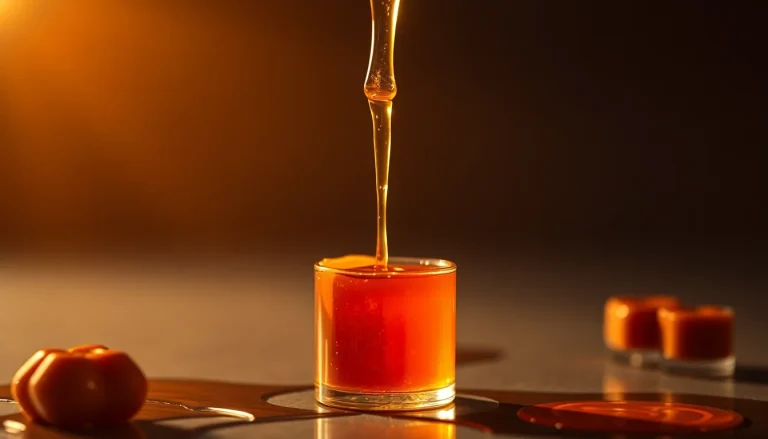
Vanilla tincture is a fragrant extract made by soaking vanilla beans in alcohol. People encounter it in gourmet foods, perfumes, and home fragrance products. This ingredient matters because it provides the authentic, warm vanilla aroma that synthetic vanillins can’t fully replicate, making it prized by perfumers and chefs alike.
Safety Profile
GENERALLY SAFEWhat Does Vanilla tincture Smell Like?
Vanilla tincture opens with a rich, boozy warmth from the alcohol carrier, quickly revealing the deep, creamy-sweet character of true vanilla. Unlike single-molecule vanillin, it carries complex nuances – hints of dried fruit, aged tobacco, and a whisper of floral undertones from the vanilla orchid. The dry-down is exceptionally long-lasting, leaving a comforting gourmand trail that evolves into a soft, powdery woodiness over hours.
In Famous Fragrances
Fragrance associations may not reflect actual formulations.
Vanilla tincture provides the authentic depth in Shalimar’s legendary base, blending with benzoin and iris to create its signature powdery-oriental character that synthetic vanillin alone couldn’t achieve.
This masterpiece uses vanilla tincture to capture the rum-like richness of aged vanilla pods, creating a boozy, almost caramelized vanilla effect in the heart notes.
The tincture’s natural complexity balances the bright citrus top notes, preventing the vanilla from becoming overly sweet while maintaining authenticity.
Vanilla tincture forms the core of this cult favorite, providing the slightly smoky, resinous quality that distinguishes it from simpler vanilla fragrances.
Here the tincture’s boozy opening is used creatively to enhance the aromatic tea and spice notes before settling into a sophisticated dry vanilla.
2D Molecular Structure
SMILES: CC1=CC=C(C=C1)CC(=O)C2C3=CC=CC(=C3C(CN2C(=O)C=CC4=C(C=CC(=C4F)Cl)N5C=NN=N5)(C)C)C6=CC=C(C=C6)C(=O)NC.CC1=CC=C(C=C1)CC(=O)C2C3=CC=CC(=C3C(CN2C(=O)C=CC4=C(C=CC(=C4F)Cl)N5C=NN=N5)(C)C)C6=CC=C(C=C6)[N+](=O)[O-].CC1(CN(C(C2=CC=CC(=C21)C3=CC=C(C=C3)C(=O)N)C(=O)CC4=CC=C(C=C4)C(=O)O)C(=O)C=CC5=C(C=CC(=C5F)Cl)N6C=NN=N6)C
Chemistry, Properties & Perfumer Guide
The Chemistry
Vanilla tincture is an alcoholic extract containing hundreds of compounds from Vanilla planifolia beans. The primary aromatic component is vanillin (4-hydroxy-3-methoxybenzaldehyde), but the tincture also contains vanillic acid, p-hydroxybenzaldehyde, and numerous phenolic compounds that develop during the curing process. Unlike synthetic vanillin, the tincture retains the bean’s natural waxes, sugars, and minor constituents that contribute to its complexity. The extraction process typically uses 35-40% ethanol, which acts as both solvent and preservative while contributing its own slight aromatic character to the final product.
Physical & Chemical Properties
| Appearance | Dark brown liquid |
|---|---|
| Solubility | Miscible with alcohol, oils |
| Extraction Method | Ethanol maceration |
Perfumer Guide
| Application | Typical % | Range | Notes |
|---|---|---|---|
| Fine Fragrance | 1-5% | Up to 10% | Adds natural depth to vanilla accords |
| Gourmand Perfumes | 3-8% | Up to 15% | Provides authentic foodie realism |
| Home Fragrance | 0.5-2% | Up to 5% | Used sparingly due to potency |
| Cosmetics | 0.1-0.5% | Up to 1% | Adds subtle fragrance enhancement |
Classic Accords
Tip: Add early in the blending process to allow the alcohol-soluble components to integrate fully with other materials.
Alternatives & Comparisons
Pure synthetic vanillin provides stronger sweet vanilla character but lacks the complexity and natural depth of vanilla tincture.
3-4 times more potent than vanillin with a creamier character, but still lacks the natural nuances of tincture.
Supercritical CO2 extraction captures more vanilla compounds than tincture but lacks alcohol-soluble components and is more expensive.
Safety, Regulatory & Sustainability
⚠ Regulatory Disclaimer
General reference only. Consult current IFRA Standards Library before formulating.
IFRA Status
No IFRA restrictions. Vanilla tincture is classified as a natural extract rather than a single fragrance material.
RIFM Assessment
Considered safe for use in fragrances by RIFM, with no significant safety concerns at typical usage levels.
Sustainability
Vanilla tincture production relies on sustainable farming of vanilla orchids, primarily in Madagascar. The traditional hand-pollination and lengthy curing process make it labor-intensive but environmentally low-impact. Synthetic alternatives have a smaller land footprint but lack the artisanal quality and supporting local economies that natural vanilla provides. Some concerns exist about vanilla price volatility affecting farmer livelihoods.
Explore Vanilla tincture
Browse essential oils and aroma compounds.
Browse on iHerb →Affiliate disclosure: we may earn a small commission at no extra cost to you.
References
- Havkin-Frenkel D, Belanger FC (2018). Handbook of Vanilla Science and Technology. Wiley. ISBN 978-1-119-37732-0
- Sinha AK et al. (2008). Vanillin: A comprehensive review. Chemical Reviews. DOI: 10.1021/cr800193g
Data: PubChem (NIH), PubMed, RIFM, IFRA. Last reviewed: Apr 2026.
Report a data errorIngredient Data Sheet
CAS 8047-24-3Physical Properties
| Molecular Weight | 2035.4 g/mol🔬 PubChem |
| SMILES | CC1=CC=C(C=C1)CC(=O)C2C3=CC=CC(=C3C(CN2C(=O)C=CC4=C(C=CC(=C4F)Cl)N5C=NN=N5)(C)C)C6=CC=C(C=C6)C(=O)NC.CC1=CC=C(C=C1)CC(=O)C2C3=CC=CC(=C3C(CN2C(=O)C=CC4=C(C=CC(=C4F)Cl)N5C=NN=N5)(C)C)C6=CC=C(C=C6)[N+](=O)[O-].CC1(CN(C(C2=CC=CC(=C21)C3=CC=C(C=C3)C(=O)N)C(=O)CC4=CC=C(C=C4)C(=O)O)C(=O)C=CC5=C(C=CC(=C5F)Cl)N6C=NN=N6)C🔬 PubChem |
Odor & Flavor
| Primary Descriptors | balsamicsweetvanilla• leffingwell |
| Functional Groups | ketonealkenearomatic💻 RDKit |
Physical data: PubChem (NIH/NLM), U.S. EPA CompTox Dashboard, EPA OPERA models, RDKit. Odor & flavor: Arctander (Perfume & Flavor Chemicals), Fenaroli's Handbook of Flavor Ingredients, Leffingwell. Thresholds: van Gemert (Compilations of Odour Threshold Values). Regulatory: IFRA Standards 51st, FEMA GRAS. Trade names: Surburg (Common Fragrance & Flavor Materials). All data compiled and cross-referenced for perfumertools.com.
Physicochemical Properties
DTXSID: DTXSID001029706
Physical Properties
| Molecular Weight | 2035.4 g/mol🔬 PubChem |
Molecular Descriptors
| Topological Polar Surface Area | 395.57 Ų💻 Computed |
| H-Bond Donors | 3 count💻 Computed |
| H-Bond Acceptors | 23 count💻 Computed |
| Rotatable Bonds | 25 count💻 Computed |
| Aromatic Rings | 15 count💻 Computed |
| Molar Refractivity | 548 cm^3/mol💻 Computed |
Data Sources:
🔬 EPA Experimental data from U.S. EPA CompTox Chemicals Dashboard & CTX APIs. 📊 OPERA Predicted using EPA's OPERA QSAR models. 💻 Computed Calculated from SMILES using RDKit.
Related Research
- Methyl undec-10-enoate (CAS 111-81-9) — Sweet Middle Note Fragrance Ingredient
- Coffee absolute (CAS 84650-00-0) — Roasted Base Note Fragrance Ingredient
- trans-2-Methyl-4-propyl-1,3-oxathiane (CAS 59324-17-3) — Sweet Top to middle Note Fragrance Ingredient
- Alcohols, C11-15-secondary, ethoxylated (CAS 68131-40-8) — Green N/A Note Fragrance Ingredient